


USB3.2 GEN2 10G 4k@60hz 20V5A E-marker Chip
Nov 22, 2021
Leave a message
1.Full-featured USB Type-C cable: A USB Type-C to Type-C cable that supports USB 2.0 and USB3.1 data transmission
2.USB 2.0 Type-C cable: USB 2.0 Type-C cable with USB2.0 Type-C male plugs at both ends, suitable for USB2.0
3.Fixed Type-C cable: a fixed Type-C cable (CaptiveCable) with a full-featured USB Type-C male connector or USB2.0 Type-C male connector at one end

The FSK communication method is deleted in the PD3.0 specification. The scenario where the USB Type-C male connector originally defined in the PD2.0 specification is connected to USB Type-A or USB Type-B uses E-Marker no longer exists.
Main points of PCB design for Type-C male connector of USB2.0 5A cable
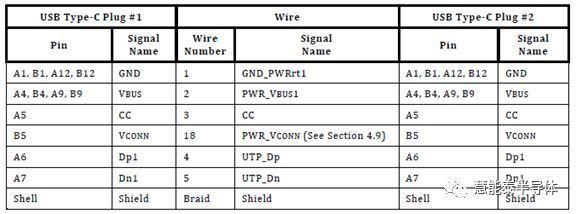
The USB2.0 outlet lines with E-Marker chip can be divided into three categories, a total of six lines:
USB2.0 data line D+/D-
Type-C communication line CC and VCONN
Power and ground, transmit 5A current
Some cables do not transmit USB2.0 data, as long as they transmit 5A current. The outlet of such a cable only needs 4 lines of VBUS, GND, CC and VCONN.
USB2.0, 5A Type-C male PCB design points:
It is sufficient to use ordinary FR4 PCB material, and it is recommended to use a four-layer PCB to meet the 5A current transmission level. The second and third layers of the inner layer are routed to VBUS and GND, respectively.
According to the specifications of the male header, PCB thickness and tolerance meet the design requirements
The top layer goes out, and the E-Marker chip and the blocking container are placed on the bottom layer of Bottom. For E-Marker chips, try to choose package E-Marker chips with large size and tube spacing, such as 2mm x 2mm DFN-6L package.
It is recommended to use the male board design, that is, the same set of PCB design is used for the end with E-Marker and the end without E-Marker, and the soldering is selected according to the BOM.
The D+/D- trace should consider impedance matching, parallel and equal-length traces.
Control the length and width of the PCB, the recommended size is 8.4mmx 6mm
Design Points of Type-C Male PCB for USB3.1 Cable
The USB3.1 outlet lines with E-Marker chip can be divided into three categories, a total of 16 lines:
USB3.1 high-speed data line TX1+/TX1-, RX1+/RX1-, TX2+/TX2-, RX2+/RX2-
USB2.0 data line D+/D-
Type-C communication line CC and VCONN
Sideband signal SBU1/SBU2
Power and ground
There are two types of USB3.1 cables: coaxial cables and twisted pair cables. The actual number of twisted-pair cables is at least 16. The coaxial cable needs to add about 4 GND cables on the basis of twisted-pair cables. Realize the shielding of the coaxial line.

The high rate adopted by usb3.1 data standard has entered the microwave field. For such a high rate of transmission through connectors and cables, the distortion caused by channel discontinuity must be considered. In order to maintain the distortion at a controllable level, the standard specifies the impedance and return loss of cables and connectors. The test items also include impedance, propagation delay, propagation skew, attenuation, crosstalk and other test items
Key points of type-C male PCB design of usb3.1:
Select high-frequency and high-performance PCB board, and six layer PCB is recommended. A few manufacturers can use 4-layer PCB to meet the 10GHz certification requirements. It is recommended that the second and fifth layers of the inner layer take GND, GND, VBUS and GND respectively.
According to the specification of male head, PCB thickness and tolerance meet the design requirements.
The e-marker chip and resistance capacitance device are placed on the bottom layer of the bottom. E-marker chip shall be packaged with large size and tube spacing, such as 2mm x 2mm dfn-6l package.
It is recommended to adopt the male board design, that is, the same set of PCB design shall be adopted for the end with e-marker and the end without e-marker, and the selective welding shall be carried out according to the BOM.
The routing of high-speed signal lines shall be very careful. Impedance matching shall be considered for routing, parallel and equal length routing, and anti crosstalk shall be fully considered. Make as few holes as possible. The recommended differential impedance is 85ohm + - 5ohm.
Impedance matching is considered for D + / d-routing, parallel and equal length routing.
Controls the length and width of the PCB.
It is necessary to design the clamp position and fix the wiring to facilitate processing
The first principle of using E-MARK: if you want to provide more than 5V voltage or more than 3A current through USB type-C interface, you must need type-C interface chip to realize USB PD protocol
The second principle of using E-MARK: if your equipment uses 5V voltage and does not exceed 3A current. It depends on the power supply characteristics and data transmission characteristics of the equipment itself. If the equipment itself only supplies power to the outside or only receives power from the other party, and the power supply role and data transmission role are matched by default (that is, the power supplier is host and the power consumer is slave or device), you do not need type-C chip
The third principle of using E-MARK: these two principles are used to judge whether type-C chip is required on the equipment. In addition, whether e-marker chip is required on the C-C transmission line of great concern is whether the current will exceed 3A during use? If not, you don't need a to C and B to C lines. See whether you need to implement the battery charging protocol. If you want to implement it, you can use ldr6013. The advantage is that it can not only realize charging, but also transmit data, so as to avoid the problem that some adapters that do not comply with the battery charging protocol can't charge Apple devices
